
Hyundai IONIQ 5 (2021-2026)
VerifiedAlso referred to as: Hyundai IONIQ 5 2025 and Hyundai IONIQ 5 2027.8 reviews
- See all


There's a reason this car won world car of the year 2022 - it is very good. Show details

Spyware machine – Spyware machine. If you buy this car, you are agreeing to have all of your personal information including VOICE RECORDINGS being sold and shipped all around the world for whatever nefarious purpose. When I spoke to Hyundai on the phone and asked if there was anyway to disable all of this horrifying telemetry, the lady on the phone was so… Read more
dismissive and unhelpful, replying "are you even a Hyundai owner?" Jeez lady you think that's going to convince me to buy one?

Buy a different EV – My car is mostly okay, but my experience with Hyundai has been anything but. I bought my car new in October 2022. Approximately 8 months later in June 2023, my car had the ICCU fault. It put itself into "limp mode" on a 80km/h road and subsequently died on the side of the road in a dodgy area at 10pm at night. It had to be dragged onto the back… Read more
of a truck because it couldn't even be put into neutral.
That experience wasn't great, but what made it so much worse was the 2 months it was off the road while Hyundai waited for parts. Hyundai were evasive about fixing the car and also resistant when I brought up my consumer rights. Hyundai, to their credit, did pay for a hire car for the two months - but a base model conventional Kia Sportage is nothing like my brand new EV.
I did eventually get my car back in late August 2023. It hasn't suffered the fault since. However, every day I read online about fellow Ioniq 5 (and Kia EV6 owners) experiencing this fault, and getting resistance from Hyundai about timeframes for fixing and about hire cars. It is also apparent that this fault has happened to some people multiple times, including after the ICCU recall. I can't help but think therefore that my car is a ticking timebomb that is going to strand me one day, or worse yet, hurt me.
I love my car, but when people ask me whether to buy one, I tell them to buy a different EV.
- +8

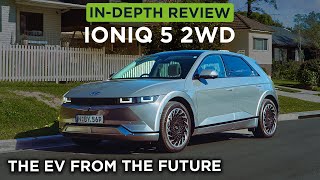
The pick of the IONIQ 5 range...unless you want to go slightly faster or need AWD – Build quality is no different between the models, so expect the same high quality, recycled, materials throughout the cabin. Our tester had travelled just under 10,000km and was a perfect example of what sort of wear and tear you can expect after some time with this car. To no surprise, the light coloured door trim and leather sported some… Read more
marks and scuffs. On top of this, the paperette trim pieces on the door were susceptible to tears.
The doors are weighty and panels fit tightly together, helping convince buyers that this certainly is a premium product.
Priced from $71,900 before on-roads and incentives (depending on which state you live in), this is on the more expensive side of entry-level EVs.
You’re only losing a motor for that price compared to the dearer all-wheel drive model, so it really is a matter of whether you want to go faster and whether you need additional grip.
There are cheaper alternatives out there, like the Polestar 2 and the Tesla Model 3. However, they aren’t as feature packed as the IONIQ 5.
There’s no difference in servicing between the two IONIQ 5 models, so it’s the same score between the two.
The IONIQ 5 arrives with a 5 year/unlimited kilometre warranty and an 8 year/160,000km warranty for the batteries.
Servicing costs are $220 for the first three visits to the dealership, but the fourth visit will set you back $804. It’s a lot cheaper to service this EV than a fossil fuel-powered alternative. However, it’s more expensive than what you’d expect to pay for a Tesla.
Again, there’s no difference in sound between the two models. It’s a serene, quiet and relaxing cabin.
As mentioned, there were some rattles that distinctly came from the rear seats. It sounded like the locking mechanism between the rear seat and the boot had a little play in it, causing it to rattle.
Aside from the occasional rattle, the speaker system and dense sound deadening created a more than ideal place to listen to whatever your taste desires.
There is an artificial sound generator that cuts out at speeds above 20km/h that’s simply intended for pedestrian safety at low speeds.
Despite missing an additional engine, there wasn’t any major improvement to the braking feel of the IONIQ 5.
It’s a heavy car, and you certainly feel that when suddenly coming to a stop. Regenerative braking is a step forward in the daily driving experience. It’s finely tuned here in the IONIQ 5, meaning you don’t really have to touch the brake pedal at all.
Despite only having 160kW, 350Nm and a 0-100km/h time in the mid 7 seconds, this is a rapid family EV. My Abarth 500 hot hatch pulls similar times to 100km/h, so I’m very familiar with what that feels like.
However, in EVs, these numbers are a little irrelevant.
Instant torque delivery from 0 rpms means you’ll be the first off from the lights, making merging a lot easier. Overtakes on the highway are as instant as the throttle input you give too.
Adjusting between Eco, Normal and Sport also makes a noticeable difference to the power delivery, ranging from “meh” to “woah” in reactions depending on which mode you’re in.
Where I could feel a slight difference was in the handling section of this review.
A lighter front end meant that the IONIQ 5 two-wheel drive was a little more nimble on its feet and less prone to understeer. It’s a rear-wheel drive and rear-engined car, which traditionally is reserved for the likes of supercars.
You can have a bit of fun in this family car thanks to instant power delivery at any rpm, and thanks to the battery pack being placed below the cabin for the lowest possible centre of gravity.
Possessing the very same battery pack as the all-wheel drive model, the two-wheel drive version trades performance for more range.
The estimated range on the IONIQ 5 is quoted at 430km for this particular model, with the 2WD squeezing in a few tens of kms more than that.
We don’t measure litres per kilometre here; rather, we look at energy consumption in kWh. Hyundai claims around 18kWh per 100km of driving, which was actually dead on the money for what I was seeing when driving this EV around.
Built on a 800V architecture, this battery pack is one of the most efficient systems you can buy on the EV market now. Tesla and Porsche offer marginally more efficient batteries on top of what’s offered here.
On average, to charge from around 20% to 90% it cost us $25-30 from a fast charger. You will find however, out on the open roads that the IONIQ 5 range suffers a lot when travelling at higher speeds compared to driving in urban areas.
There is one especially unique feature, called ‘Vehicle-to-Load’. It’s a plug that is designed to hang out from the charge port of the car, and offers a conventional house plug on the other side. Yes, that means you could power items like a microwave, blender, chargers - maybe even a powerboard.
Against the all-wheel drive model, I’d say get this! You get more range, more money to buy at-home fast wall chargers and the exact same car, aside from grip and performance.
*Disclaimer - I work for ProductReview as their independent car and motorbike expert. I borrow new cars and motorbikes from manufacturers and owners to review. I am not paid or incentivised by these brands to post reviews. I write and create content to provide insight and information about any new or used vehicle I can get my hands on.
- +8
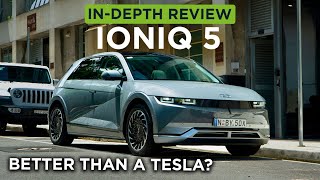
The perfect Tesla Model Y alternative – Tesla certainly loses this round when it comes to build quality. It’s a running Internet meme that it’s not uncommon to find basic quality faults on new Teslas, like missing paint, squeaks, rattles, and misaligned panels. When asking potential EV (Electric Vehicle) buyers what stops them from buying one, I found that these were slight… Read more
inhibitors to fully committing their cold hard cash on electric cars with the letter ‘T’ on the bonnet.
That’s where Hyundai comes in. It’s a tried, tested and established auto manufacturer that has the additional funds to avoid any embarrassing quality mishaps. The IONIQ 5 isn’t just a well-built car, it’s Hyundai’s proof of concept to show that they’re committed to building more luxurious cars.
The IONIQ 5’s door feel, latches, panels and paint never caused alarm when looking or interacting with them. The trim pieces all felt solid and looked like they were in place, which helped the IONIQ 5 feel as premium as it looks.
The interior leather and recycled materials were a ‘wow’ factor for the passengers who experienced them during my time with the car. There’s a healthy use of soft-touch materials, responsive touch screens and a distinct lack of obvious cost-cutting applied to this retro-designed EV.
Starting at $71,900 and $75,900 for the 2WD and AWD model respectively, there’s a tonne of kit you’re getting for the price.
For just a bit less than $80,000, you’re getting every option under the sun. Whether it’s electric seat adjustment for all seats, front and back heated seats, front ventilated seats, a digital driver displays, a 3D surround parking camera, a large panoramic sunroof, a larger battery pack (compared to other markets), or a remote control to move the IONIQ 5 from the outside - you have it all.
There isn't a feature this car is missing in 2022, which really exemplifies why Hyundai is quickly becoming a favorite brand here in Australia. There’s no silly options list, or unexplainable missing options; you have everything you might need for a large hatchback like this.
I do think the absence of smarter in-built navigation systems - like Google Maps - and constant over-the-air updates would go a long way for future IONIQ models.
The IONIQ 5 arrives with a 5 year/unlimited kilometre warranty and a 8 year/160,000km warranty for the batteries.
Servicing costs are $220 for the first three visits to the dealership, but the fourth visit will set you back $804. It’s a lot cheaper to service this EV than a fossil fuel-powered alternative. However, it’s more expensive than what you’d expect to pay for a Tesla.
The isolation from exterior noise has been an obvious inclusion in designing the IONIQ 5. You don’t hear any disturbing wind noise or a loud roar being produced from road resonance. However, any squeaks, rattles and creaks are made very apparent when produced in relative silence.
It’s a relaxing ride, but I hope the creaks and rattles I experienced are ironed out in future models.
The IONIQ 5 has stepped up to the plate to deliver a seemingly smooth, 1-for-1 braking experience when lifting off the accelerator. It’s adjustable, meaning you can turn this feature off completely, however I don’t see why you would.
Sending power through a dual motor, AWD set up, you receive a combined output of 255kW and 605Nm. That’s some serious power from a company that is still making engines that produce 115Nm.
The 0-100km/h sprint is a claimed 5.1 seconds, and for most people, that’s beyond what’s needed from their daily driver. It’s a fantastic experience to unleash all 605Nm, seeing as this is an EV with all of its torque immediately available at 0rpms.
Similar to Tesla, Hyundai have done away with a central gear selector, and have opted for a column-mounted shifter stalk. I personally prefer a column shifter to free up interior space between the front passengers. Although, with ‘D’ requiring you to twist the shifter forwards, rather than towards you (like you would in a traditional automatic car), it requires a slight change to your muscle memory.
Riding on a set of 20-inch aero-style alloy wheels, the IONIQ offered a sublime ride over a variety of surfaces.
I find modern EVs offer a solid ride compared to petrol powered equivalents, and all that weight down low helps dampen any abrupt reactions to imperfections on the road.
Not only does a concentrated amount of weight below the occupants help with ride quality, but it also does a fantastic job of assisting a 2 tonne vehicle through corners. This low centre of gravity will only encourage you to explore the limits of grip this IONIQ 5 has to offer.
Twists and turns were exhilarating with instant torque available, and a capable set of EV-specific Michelin tyres fitted to this car. I assume the EV element of these tyres reduces the rolling resistance of the rubber, but still retains lateral grip for those fast corners.
The estimated range on the IONIQ 5 is quoted at 430km for this particular model, with the 2WD squeezing in a few 10’s of kms more than that.
We don’t measure litres per kilometre here, rather we’re looking at energy consumption in kWh. Hyundai claims around 18kWh per 100km of driving, which was actually dead on the money for what I was seeing when driving this EV around.
Built on a 800V architecture, this battery pack is one of the most efficient systems you can buy on the EV market now. Tesla and Porsche offer marginally more efficient batteries on top of what’s offered here.
The battery pack translates to an obvious careful consumption of range, compared to the Volvo XC40 Recharge I was driving that same week. Additionally, it only requires 5 minutes to get 100km of range from a fast charger, and can take 18 minutes to charge from 10% to 80% from that same charger.
Rear seats can electronically slide forwards and backwards, for quick adjustment to make more leg room or boot space. This is a feature that’ll come in handy for bigger items that need to be placed back there. Annoyingly, the higher boot floor means that the cut-back design on the rear of this car restricts taller items being placed near the entrance of this boot. It’s still a practical car, but that’s just one annoying limitation for those used to taller, more square boot shapes.
It’s practical with a capital P in here. There’s a 9.5L glove drawer, not a box, as it pulls out of the dash just like a drawer. There’s a 60/40 split for the rear seats to reveal more internal storage space for two. It’s flat as well, meaning that you could certainly camp in here, as Hyundai would like to suggest from some of their promo materials on this EV.
There is a ‘frunk’ aka front boot, but it’s not all that useful for larger items. It won’t fit a bag, and it gets kinda dirty under the bonnet as it’s not as well finished as some other frunks. It is, however, a great place to store the charger and other small essentials like that!
*Disclaimer - I work for ProductReview as their independent car and motorbike expert. I borrow new cars and motorbikes from manufacturers and owners to review. I am not paid or incentivised by these brands to post reviews. I write and create content to provide insight and information about any new or used vehicle I can get my hands on.

Amazing vehicle – This car is so wonderful to drive, older driver but I have managed the high spec technology. Initially had range anxiety, but not an issue as charging stations are becoming more available. The inside luxury of the vehicle is amazing, the silent driving is comfortable. The self park for tight spaces is a terrific feature.

Love the Ioniq 5 – We've had this car since October 2022 and has served as our primary vehicle since. We love it. It has the bells and whistles you'd expect from a modern car, but it also has a few cool tricks that only an EV can do. One example: it's pretty cool when you can boil a kettle in the middle of nowhere with the built-in powerpoint. We've only had one… Read more
intermittent issue with the USB connector for CarPlay - hopefully the service centre can work out what's wrong when I next see them.

Best car I had in my life – Did test drives in many EV's, but nothing beats this great car with all its possibilities and just fun of driving. The competetion,especially from a well known US brand this not come close. It is a bit tough in WA, as the politicians here are very anti-environment, so no incentives or reductions on registration or stamp duty or anything. Just a… Read more · 1
tax that soon will come, starting at 2.5 c/km. I guess we will also be forced to tow a trailer with coal then. So bought this car despite te massive counter measures from Western Power and the governement, and love it to bits. Absolutely recommended. I have the AWD MY 23 in Atlas white.
ProductReview.com.au has affiliate partnerships. These do not influence our content moderation policies in any way, though ProductReview.com.au may earn commissions for products/services purchased via affiliate links.
Calling it a ticking timebomb was prophetic. Tonight at approximately 7pm my car died again on a… Read more (+3 replies)